
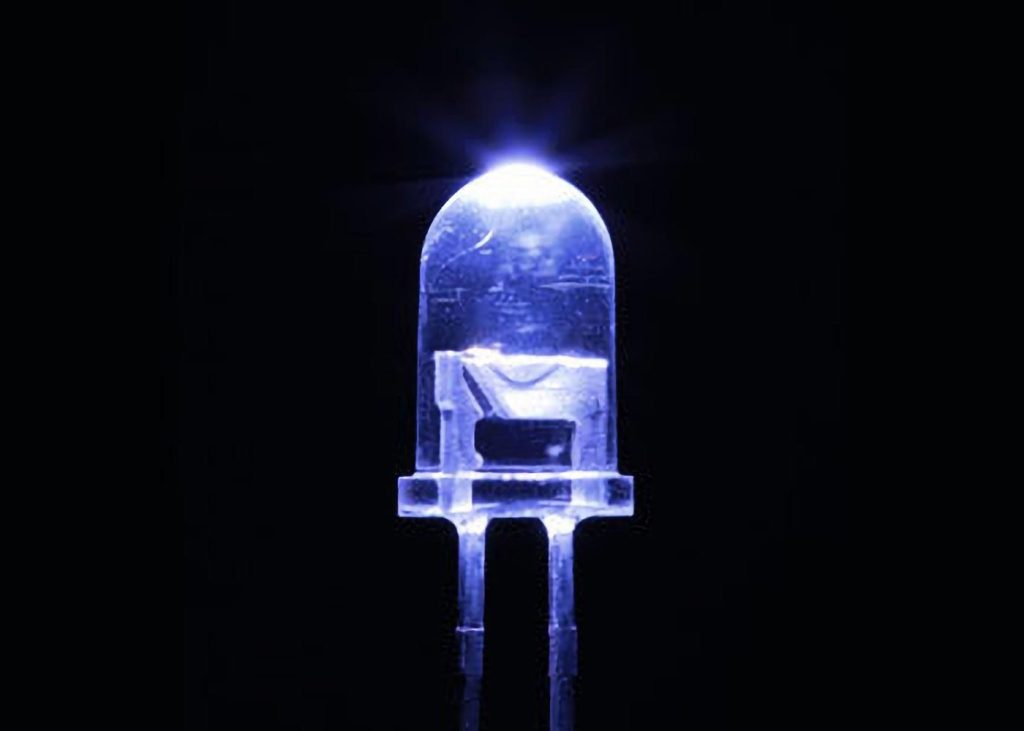
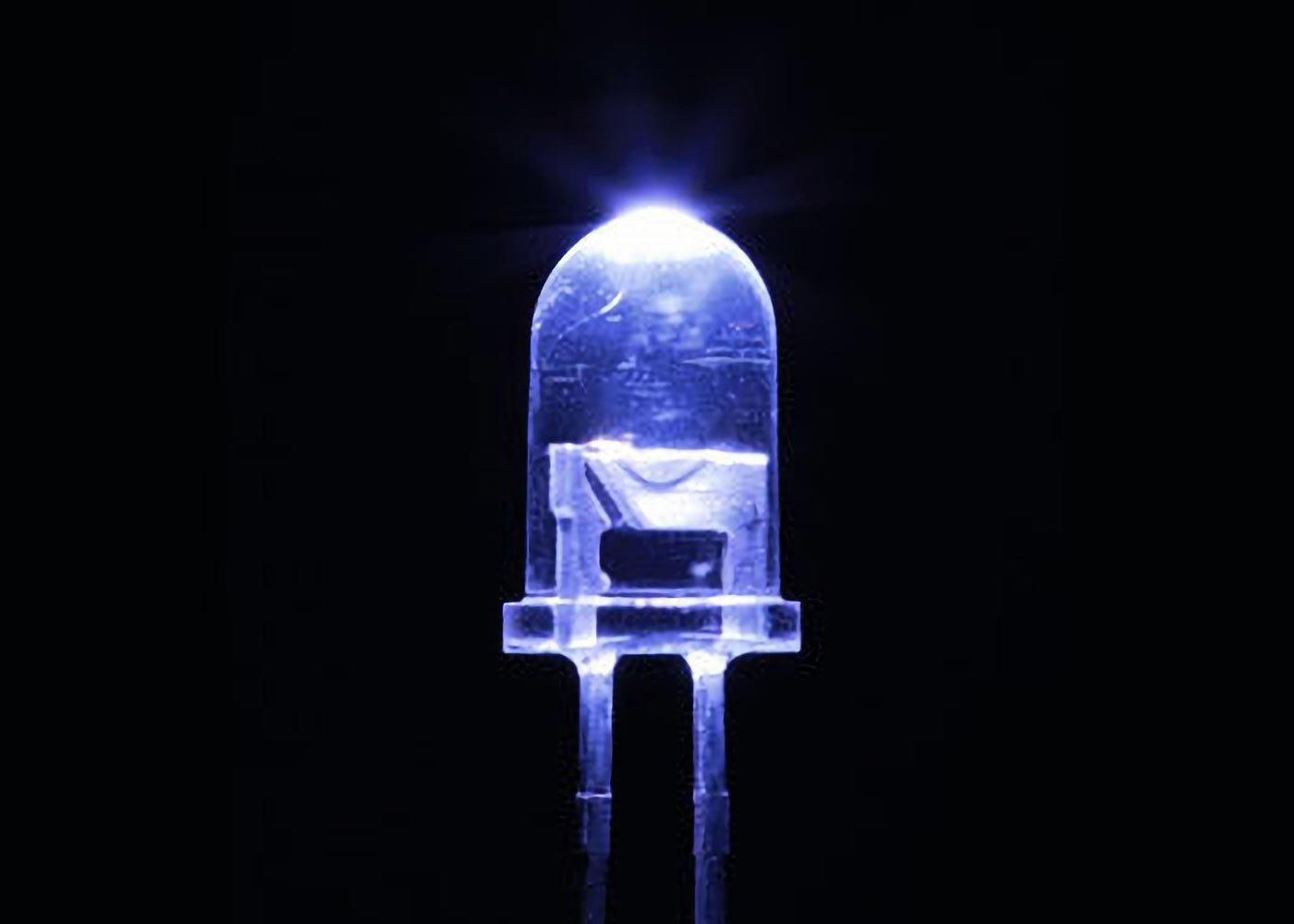
الشكل 1: تصدر معظم مصابيح LED ضوءًا مرئيًا ، لكن علماء فيزياء RIKEN ابتكروا مصباح LED ينبعث في منطقة ضيقة في الأشعة فوق البنفسجية البعيدة وهو آمن للبشر ولكنه قاتل للفيروسات والبكتيريا. الائتمان: RIKEN
يمكن لمصباح LED قوي تطهير الأسطح بكفاءة مع الحفاظ على أمان الأشخاص.
صمم علماء فيزياء RIKEN مصباحًا LED عالي الكفاءة قاتل للميكروبات والفيروسات ولكنه آمن للبشر. في يوم من الأيام ، يمكن أن تساعد البلدان على الخروج من ظلال الأوبئة عن طريق قتل مسببات الأمراض في غرف مليئة بالناس.
مصابيح مبيدات الجراثيم فوق البنفسجية فعالة للغاية في إبادة البكتيريا والفيروسات. في الواقع ، يتم استخدامها بشكل روتيني في المستشفيات لتعقيم الأسطح والأدوات الطبية.

صمم Masafumi Jo واثنين من زملائه في العمل مصباح LED يساعد في حماية المجتمع من الأوبئة. الائتمان: RIKEN
يمكن إنشاء مصابيح من هذا النوع باستخدام مصابيح LED ، مما يجعلها موفرة للطاقة. ومع ذلك ، فإن مصابيح LED هذه تنتج ضوءًا فوق بنفسجي في نطاق يضر[{” attribute=””>DNA and therefore cannot be used around people. The search is on to develop efficient LEDs that shine light within a narrow band of far-ultraviolet light that appears to be both good at disinfecting while remaining safe for people.
Germicidal LED lamps that operate in the absence of humans are often made from aluminum, gallium, and nitrogen. By increasing the amount of aluminum they contain, these LEDs can be modified to work in a wavelength region that is safe for humans. This approach has been used before but has resulted in dramatically reduced power.
To work through this issue, three physicists at RIKEN Quantum Optodevice Laboratory, Masafumi Jo, Yuri Itokazu, and Hideki Hirayama, created an LED with a more complex design. They sandwiched together multiple layers, each containing slightly different proportions of aluminum. In addition, in some layers they also added tiny amounts of silicon or magnesium.
This effectively created an obstacle course for electrons, hindering their movement across the material and trapping them for longer in certain areas. This resulted in an increased amount of light emitted by the device and a reduced amount absorbed by it.
The team used computer simulations to model all possible effects to help pin down the ideal design. “We then grew samples to see if it was effective or not,” Jo says. Precisely controlling the thickness of each layer was the biggest experimental challenge. They ended up with an LED operating in the far ultraviolet, with an output power almost ten times higher than their previous best.
The COVID-19 pandemic brought a new consciousness of the importance of being able to eradicate viruses and microbes on surfaces. “We trust that our findings and technologies will be very useful for safeguarding society against this and future pandemics,” says Jo.
Jo adds that the trio will strive to improve their LED’s performance even further. “There’s still much room for improvement in the output power and the power efficiency,” he notes.
Reference: “Milliwatt-power far-UVC AlGaN LEDs on sapphire substrates” by Masafumi Jo, Yuri Itokazu and Hideki Hirayama, 25 May 2022, Applied Physics Letters.
DOI: 10.1063/5.0088454

ليان القحطاني كاتبة في موقع alqraralaraby.news، تكتب في مجالات الأخبار والسياسة والأعمال والتكنولوجيا والرياضة والترفيه وأسلوب الحياة. تركّز على تقديم تغطية واضحة وموثوقة للمستجدات، وتوفير معلومات مفيدة للقرّاء، مع الاهتمام بالقصص والموضوعات ذات الصلة بالحياة اليومية والأحداث الراهنة بأسلوب مهني وسهل المتابعة.


قصص أخرى
شلالات الدم في القارة القطبية الجنوبية.. ظاهرة طبيعية تكشف أسرار عالم معزول منذ 1.5 مليون عام
ماذا ينتظر الأرض بعد موت الشمس؟ اكتشاف فلكي غير مسبوق يقرّب العلماء من الإجابة
صاروخ فالكون 9 التابع لشركة سبيس إكس يتوقف قبل إطلاقه ملياردير في مهمة خاصة